
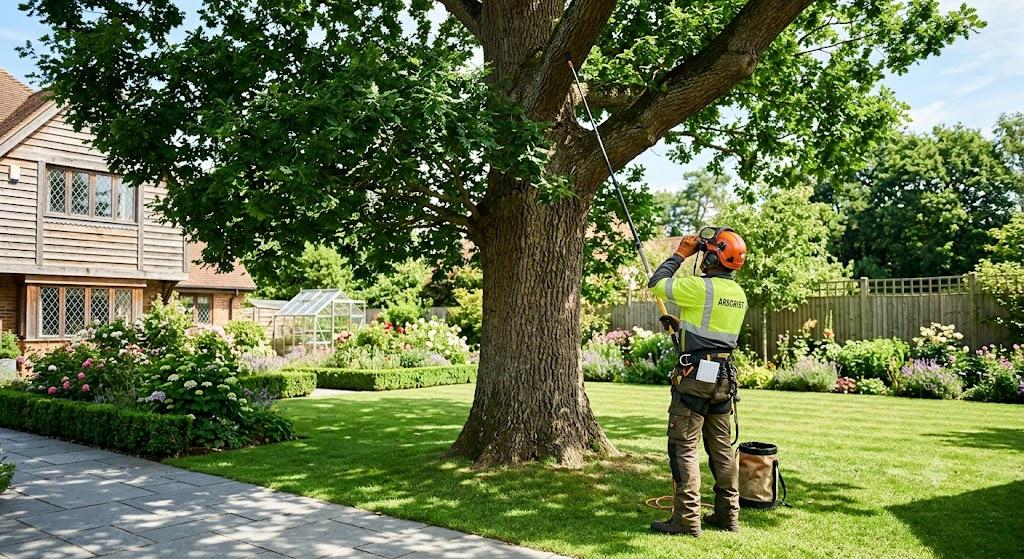
Summer is the time when gardens come into their own. Trees provide welcome shade, improve privacy and create an attractive outdoor space for relaxing and entertaining. However, warmer weather can also expose problems that have developed over the winter and spring.
Whether you have a mature oak, ornamental cherry or a line of conifers, a little attention during the summer months can help keep your trees healthy and safe.
Check for Dead or Damaged Branches
Strong spring winds and changing weather can leave branches weakened or partially damaged. During the summer, when trees are in full leaf, these issues are often easier to spot.
Look out for:
- Dead branches with little or no foliage
- Cracks or splits in larger limbs
- Branches rubbing against each other
- Limbs hanging over driveways, roads or neighbouring properties
Removing damaged branches early can reduce the risk of failure during summer storms and improve the long-term health of the tree.
Water Young Trees During Dry Weather
Established trees generally cope well with dry conditions, but newly planted trees need extra care.
During prolonged hot weather:
- Water deeply rather than little and often
- Water early in the morning or during the evening
- Apply mulch around the base to help retain moisture
- Keep mulch clear of the trunk to prevent rot
A healthy root system established in the first few years gives young trees the best chance of thriving.
Inspect Trees Near Your Home
Summer is a good time to look closely at trees growing near buildings, garages, fences and sheds.
Watch for signs such as:
- Branches touching roofs or gutters
- Growth blocking windows or solar panels
- Trees interfering with overhead cables
- Roots causing lifting to paths or driveways
Addressing these issues early is often more straightforward and less costly than leaving them to develop.
Avoid Heavy Pruning in Hot Weather
Many people assume summer is the perfect time to cut back trees heavily. In reality, extensive pruning during periods of intense heat can place unnecessary stress on some species.
Light maintenance pruning and the removal of deadwood are often suitable during summer, but major reductions are usually better planned at the appropriate time of year, depending on the species and its condition.
A qualified tree surgeon can advise on the best approach.
Keep Trees Clear of Climbing Plants
Ivy and other vigorous climbers can quickly cover a tree during the growing season.
Although ivy does not usually kill healthy trees, excessive growth can:
- Hide structural defects
- Increase wind resistance
- Make inspections more difficult
- Add unnecessary weight to weakened branches
Keeping climbing plants under control makes ongoing maintenance much easier.
Watch for Signs of Disease or Pests
Summer is when many tree diseases and insect infestations become most noticeable.
Common warning signs include:
- Leaves turning brown prematurely
- Unusual leaf loss
- Fungal growth around the base
- Holes in bark
- Sticky residue or excessive insect activity
Early identification often gives the best chance of managing a problem before it spreads.
Planning Garden Improvements?
If you’re considering landscaping, building an extension or installing a new patio, don’t overlook the impact on nearby trees.
Professional advice before work begins can help protect valuable trees while ensuring your project complies with relevant planning requirements where necessary.
Professional Tree Care Across Essex
Regular inspections and timely maintenance help keep trees healthy, attractive and safe throughout the year.
At Arbtec Tree Services, we provide professional tree surgery across Essex, including tree pruning, crown reductions, deadwood removal, tree felling, stump grinding and emergency tree work. Whether you need routine maintenance or expert advice on a mature tree, our experienced team is here to help.
Contact Arbtec Tree Services today to arrange a site visit and keep your trees in excellent condition throughout the summer.